Commercial demolition is not a single moment when walls come down and structures disappear. In reality, demolition is a layered process that begins long before equipment arrives and continues well after the last load of debris leaves the site. It is a controlled operation shaped by planning, sequencing, safety, and waste handling, all working together to keep projects moving on schedule.
Understanding commercial demolition means understanding how preparation, execution, and cleanup connect. When these pieces align, demolition becomes a predictable phase of construction rather than a disruptive event.
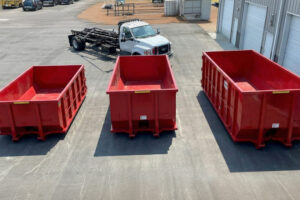
At Rocket Waste, we support commercial demolition projects with roll-off dumpster rentals in Alabama built to handle concrete, metal, wood, and bulk debris from teardown through site preparation.
Commercial Demolition Is About Planning First
Before any structure is taken apart, time is spent understanding what is being removed and how it fits into the surrounding environment. Commercial buildings often sit close to active businesses, roadways, or occupied spaces, which makes planning especially important.
Crews assess building materials, structural layout, and access points. Utilities are identified and disconnected. Entry and exit paths for equipment are mapped out. This early work sets the tone for the entire project. A well-planned demolition moves steadily, while a rushed one invites delays and confusion.
Planning also shapes waste handling decisions. Knowing what materials will be generated allows teams to stage containers and equipment appropriately.
Selective Demolition Versus Full Removal
Not all commercial demolition involves removing an entire structure. Many projects require selective demolition, where only certain areas are taken out while the rest of the building remains intact.
Selective demolition is common in renovations, tenant improvements, and interior rebuilds. Walls, ceilings, flooring, and mechanical systems may be removed while the structural shell stays in place.
This approach demands precision. Crews work carefully to avoid disturbing the areas that will remain. Material separation becomes more important, as different debris types are generated in tighter spaces.
Full demolition, on the other hand, focuses on bringing down the entire structure. This process often moves faster but produces large volumes of mixed materials that must be handled efficiently.
Safety Shapes Every Phase of Demolition
Commercial demolition sites are active environments with heavy equipment, falling materials, and changing conditions. Safety planning is woven into every step of the process.
Barriers and exclusion zones are established to control access. Dust suppression measures help manage air quality. Equipment operators coordinate closely with ground crews to maintain visibility and spacing.
Safety also extends to how debris is handled. Clear pathways for material removal reduce clutter and limit hazards. Organized waste flow improves movement across the site as demolition progresses.
Equipment and Techniques Matter
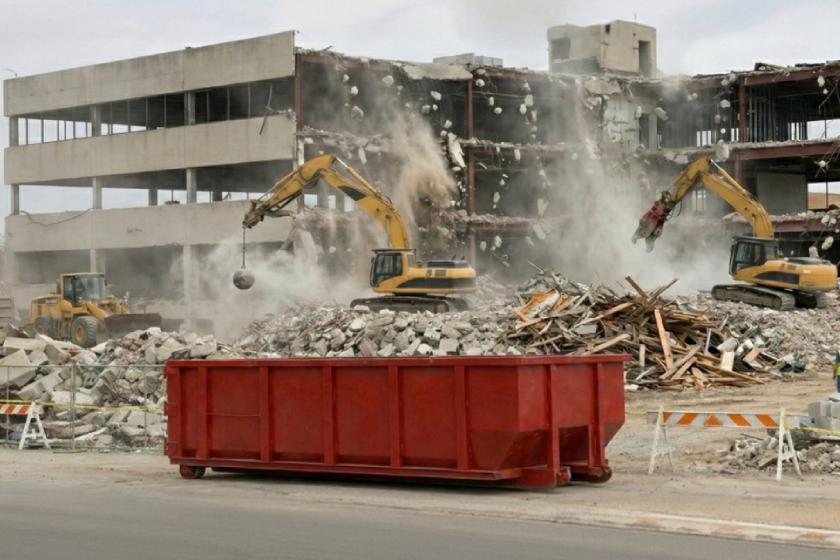
The tools used in commercial demolition depend on the structure, location, and project scope. Large exterior demolitions may involve excavators with specialized attachments. Interior demolition relies more on handheld tools and smaller equipment.
Technique matters as much as machinery. Structures are taken down in planned sequences to control collapse and debris spread. Floors may be stripped layer by layer. Load-bearing elements are addressed in a specific order.
Managing Debris Is a Major Part of the Job
Demolition generates debris quickly. Concrete, metal, wood, drywall, and general construction waste often appear simultaneously. Without a plan, debris piles up and slows progress.
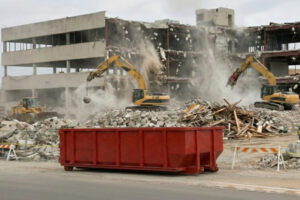
Effective commercial demolition waste management includes a debris strategy from the start. Containers are staged close to work areas. Materials are moved out continuously instead of waiting until the end.
This steady removal keeps the site workable and prevents bottlenecks. It also improves organization as demolition transitions into the next phase of construction.
Material Separation During Demolition
Material separation plays a meaningful role in modern commercial demolition. When debris is sorted during removal, downstream handling becomes simpler.
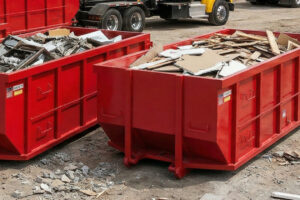
Metal can be collected separately from concrete. Clean wood can be kept apart from mixed debris. This separation often happens naturally when crews know where materials are headed.
Separating materials on-site also keeps work areas cleaner. Instead of mixing everything into one pile, debris flows into designated containers, which reduces handling and reshuffling later.
Environmental Considerations in Commercial Demolition
Environmental responsibility has become a larger part of commercial demolition planning. This does not mean slowing projects down; it means making practical choices about how materials are handled.
Recycling and reuse opportunities are identified early. Dust control measures protect surrounding areas. Waste is directed to appropriate facilities based on material type. These practices align with modern construction expectations and lead to cleaner, more organized sites.
Roll-Off Container Rentals in Alabama for Concrete, Metal, and Construction Debris
When commercial demolition or construction projects generate large volumes of debris, having a dependable waste plan can make all the difference. Rocket Waste supports contractors, site supervisors, and project teams across North Alabama with construction and demolition waste management solutions that reflect how work really happens.
Our services provide heavy-duty roll-off containers sized for concrete, metal, wood, and general debris, strategically placed to match the pace of teardown and site preparation. With service built on transparent pricing and a local team that understands project flow, we help keep demolition areas clear and orderly so work continues without interruption. If you need practical support for construction waste removal and debris handling in North Alabama, contact us today.